

Total Items
0
0 Item(s)
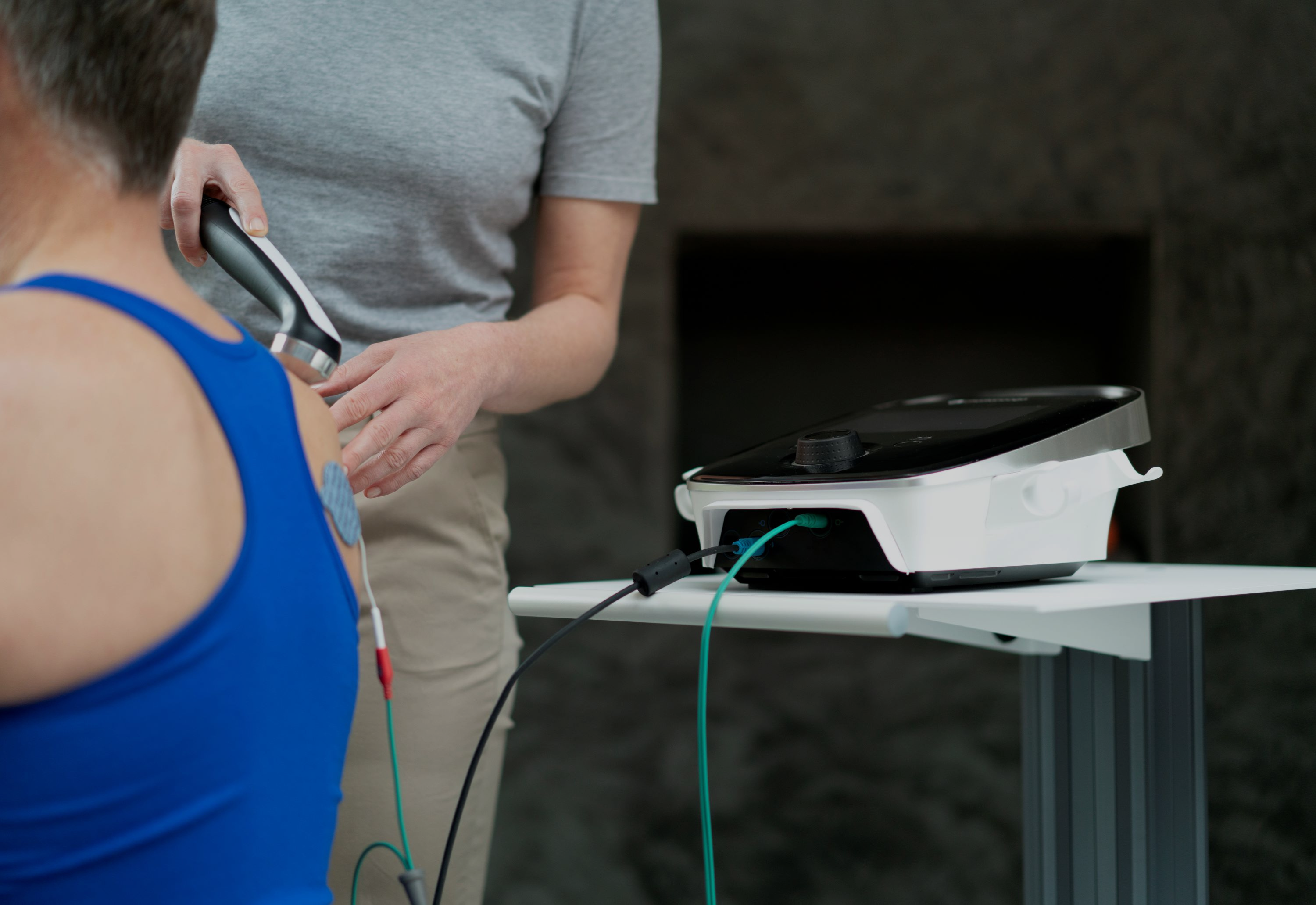

Therapeutic ultrasound uses low-intensity soundwaves at high frequency, typically 1 MHz to 3.3 MHz, delivered through an applicator with a coupling medium, to transmit acoustic energy into soft tissue. This acoustic energy produces thermal and non-thermal physiological effects in the tissue including deep tissue heating, enhanced local circulation, and stimulation of cellular biochemical pathways. The resulting heat, vasodilation, and increase in metabolic activity help to alleviate pain for several musculoskeletal conditions.1
Chattanooga® ultrasound systems support clinically established parameters that allow clinicians to tailor treatment based on:

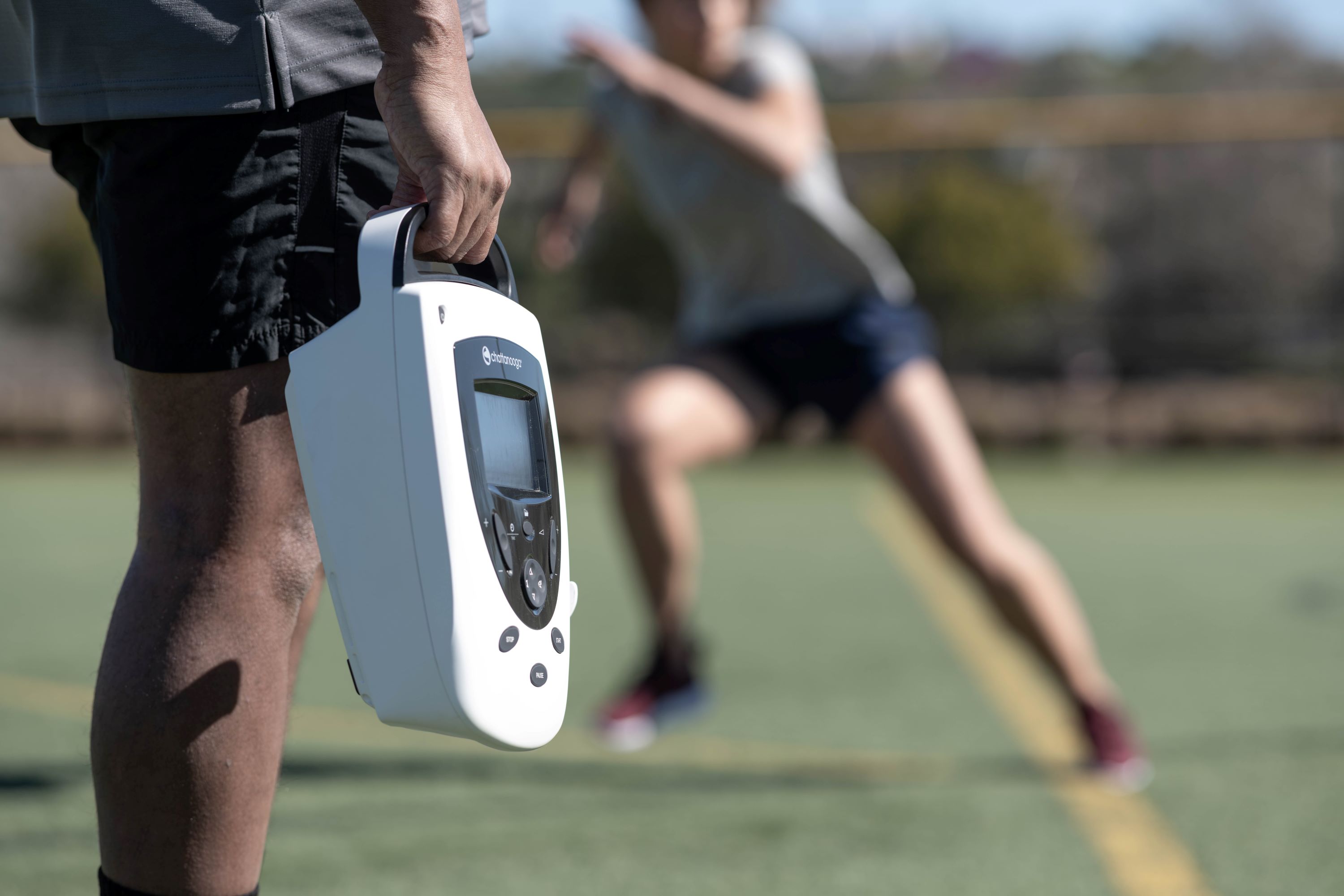
Therapeutic ultrasound is indicated for the application of deep heat in the treatment of selected sub-chronic and chronic medical conditions and is used under the order of a licensed healthcare professional. Conditions commonly treated with therapeutic ultrasound include:
Bursitis with slight calcification
Myositis
Soft tissue injuries
Capsular tightness and capsular scarring
In clinical practice, ultrasound therapy is often selected when therapeutic deep heat may help patients participate more effectively in movement-based rehabilitation.
When used within conservative care plans, therapeutic ultrasound can support several clinically relevant care objectives.

Therapeutic ultrasound is indicated for relief of:

Therapeutic ultrasound can increase local blood circulation through both thermal and non-thermal effects. The improved circulation supports the delivery of oxygen and nutrients to the treatment area helping to stimulate tissue repair processes and accelerate recovery.¹

Within approved indications, the deep heating effects of ultrasound therapy may help reduce pain and tissue stiffness, thereby supporting the maintenance or improvement of range of motion by preparing tissues for manual therapy or therapeutic exercise.
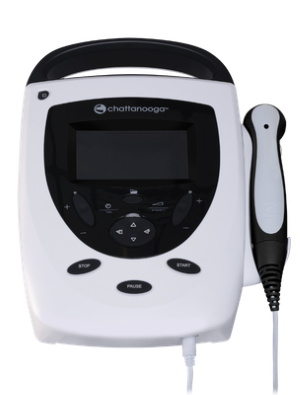
Explore how Chattanooga® ultrasound therapy systems support conservative rehabilitation workflows in your clinical setting.
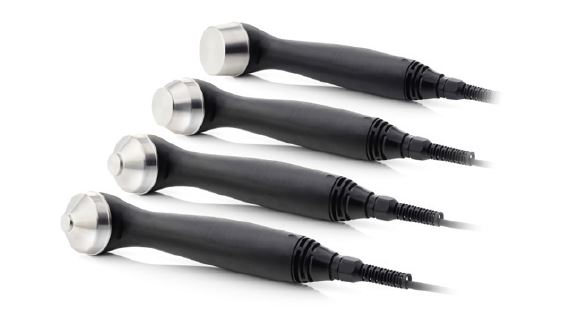
Chattanooga® ultrasound systems support clinically established parameters that allow clinicians to tailor treatment based on tissue depth, treatment goals, and patient presentation.
Intensity, duty cycle, treatment duration, and frequency selection are determined by clinician judgment and patient response.
Chattanooga® provides a portfolio of ultrasound therapy systems designed to support both high-volume clinical environments and mobile care settings. All Chattanooga ultrasound systems support 1 MHz and 3.3 MHz frequencies and interchangeable Chattanooga applicators to support treatment delivery.
For clinicians who want portability without giving up the modality flexibility of Legend 2, the Intelect® Transport 2 Combo integrates electrotherapy and ultrasound in a compact format. This makes it well-suited for multi-room clinic workflows, satellite locations, athletic facilities, and mobile care settings where portability matters most.
For clinicians who want a dedicated ultrasound-only system, the Intelect® Transport 2 Ultrasound delivers full therapeutic ultrasound capability in a compact, portable design suitable for mobile clinics, satellite locations, and field use. Battery operation supports flexible deployment across care environments.
When evaluating ultrasound equipment, clinicians and buyers typically consider:
System selection should align with caseload and conservative care objectives.
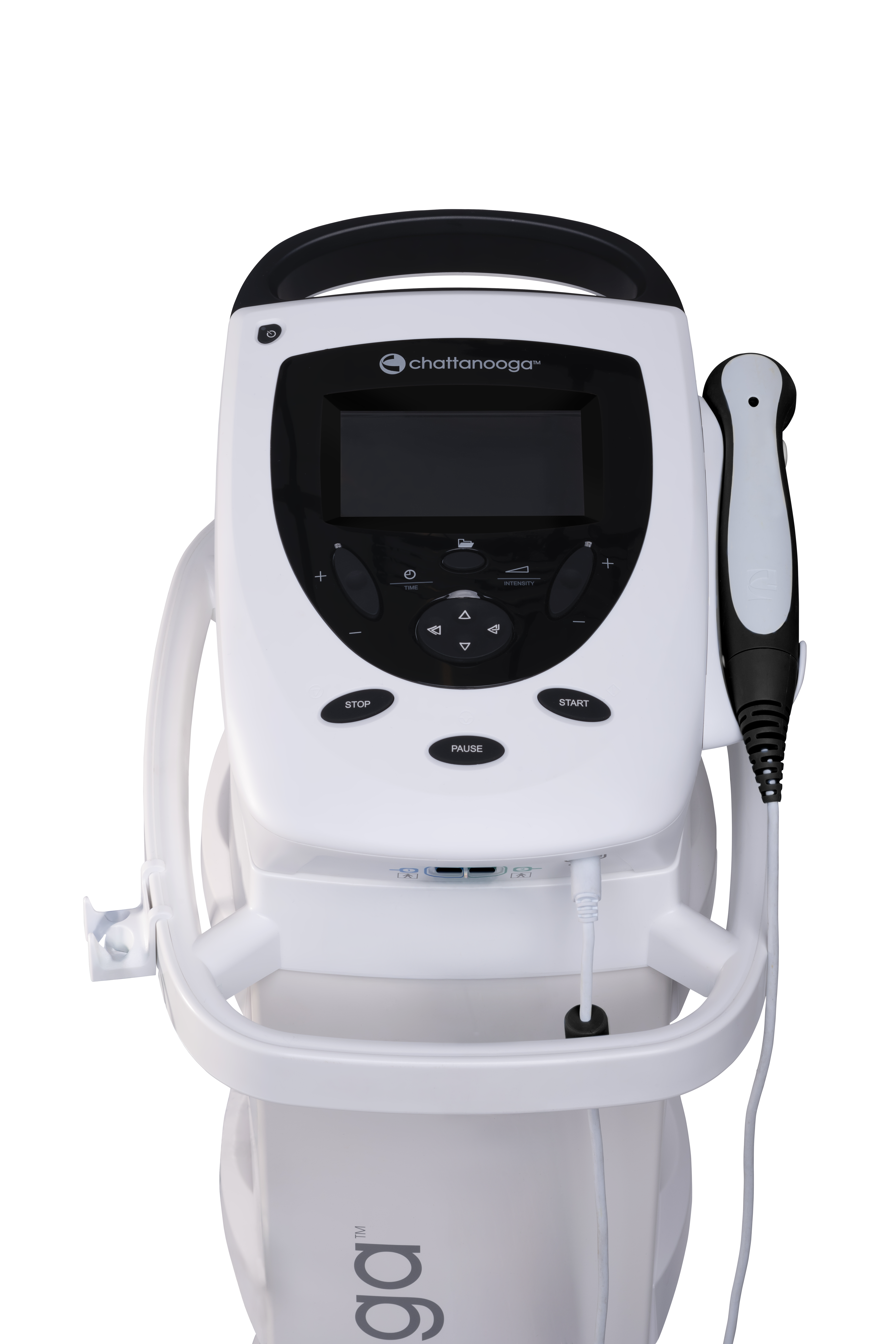
Ultrasound therapy refers to the use of a therapeutic ultrasound machine to deliver acoustic energy through an applicator with a coupling medium. Therapeutic ultrasound is typically used as an adjunct in conservative care plans, alongside therapeutic exercise and manual therapy.
A therapeutic ultrasound machine delivers high-frequency sound waves through an ultrasound head and coupling medium. Depending on settings and device, this energy can produce therapeutic deep heat within targeted tissues.
Frequency selection is based on tissue depth and clinical goals. 1 MHz is typically selected for deeper tissue structures, and 3.3 MHz is typically selected for more superficial tissues. Clinicians should determine frequency selection based on patient presentation.
Continuous ultrasound delivers energy continuously and is commonly selected when therapeutic deep heat is desired. Pulsed ultrasound delivers energy intermittently and is commonly selected when clinicians are targeting different treatment objectives. Clinicians should select mode based on patient presentation and phase of care.
Duty cycle describes the on-off pattern of ultrasound delivery, most often referenced when using pulsed ultrasound. Clinicians should choose duty cycle settings based on treatment objectives and tissue tolerance.
Chattanooga® systems support interchangeable ultrasound applicators in 2 cm², 5 cm², and 10 cm² sizes. The 1 cm² applicator is only available with Intelect® Legend 2 (2CH or 4CH) devices. Clinicians should select applicator size based on the anatomical region and treatment area to support consistent application.
Ultrasound gel, or another coupling medium, is used to support acoustic energy transmission from the ultrasound head into tissue. Proper coupling is part of correct application technique and is required for safe and effective delivery.
Intensity and treatment duration are determined by clinician judgment, patient tolerance, tissue depth, and treatment area. Parameters should be adjusted based on the patient’s response to care.
Therapeutic ultrasound is used as an adjunct to therapeutic exercise, manual therapy, and functional training. Clinicians may integrate ultrasound when therapeutic deep heat is selected to support session objectives within conservative care plans.
In early-phase care, therapeutic ultrasound may be used to support tissue warming and symptom management within approved indications, helping patients participate in manual therapy or early movement when appropriate.
In mid- to late-phase care, therapeutic ultrasound may support soft tissue extensibility when combined with therapeutic exercise and functional training.
Cart-based ultrasound systems are designed for high-volume environments and consistent room-to-room workflows. Portable ultrasound systems prioritize compact design and flexible deployment across locations. Selection is based on clinic workflow, caseload needs, and device options.
The Intelect® Legend 2 2CH and 4CH devices are cart-based systems designed for electrotherapy and therapeutic ultrasound treatments. Legend 2 supports programmable parameters and interchangeable ultrasound applicators to accommodate different treatment areas.
Intelect® Transport 2 Ultrasound is a portable, ultrasound-only system designed for flexible use across rooms and locations. It provides therapeutic ultrasound capability in a compact design, supporting mobile and multi-site workflows.
Yes. Chattanooga® ultrasound systems support both 1 MHz and 3.3 MHz frequencies. Clinicians should select frequency based on tissue depth and clinical objectives.
Therapeutic ultrasound is indicated for the application of therapeutic deep heat for selected sub-chronic and chronic medical conditions, including relief of pain, muscle spasms, and joint contractures. Refer to device labeling and user manuals for full indications and examples.
Yes. Contraindications and precautions vary by device and patient factors. Clinicians must review all contraindications, warnings, and precautions in the user manual before application and determine appropriateness based on evaluation findings.
Yes. Chattanooga® therapeutic ultrasound devices are prescription devices intended for use by, or on the order of, a physician or other licensed healthcare professional.
Clinics should evaluate frequency options, applicator sizes, portability versus stationary use, day-to-day usability, training resources, and long-term service support. Selection should align with facility needs and conservative care objectives.
¹ Uddin SMZ, Komatsu DE, Motyka T, Petterson S. Low-Intensity Continuous Ultrasound Therapies—A Systematic Review of Current State-of-the-Art and Future Perspectives. J Clin Med. 2021;10(12):2698. Published 2021 Jun 18. doi:10.3390/jcm10122698